Introduction
Mini excavators have become the cornerstone of residential construction and site development, offering unparalleled precision and versatility for foundation excavation and yard preparation. These compact machines, typically weighing between 1 to 8 tons, are specifically designed to navigate the confined spaces of residential properties while delivering the power and control needed for critical foundation work. Their ability to work in backyards, through standard gates, and around existing structures makes them indispensable for both new home construction and renovation projects.
Key Applications in Residential Construction
Foundation Excavation
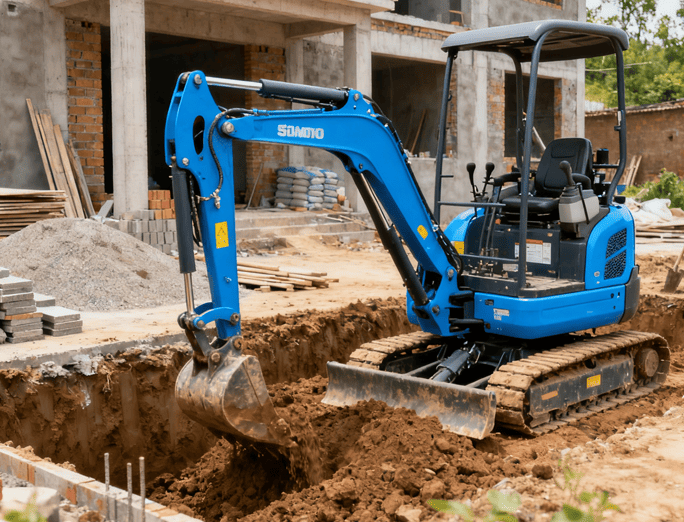
Mini excavators excel at digging precise foundation trenches for homes, garages, and additions. Their hydraulic controls allow operators to achieve exact depth and width specifications required for different foundation types, including full basements, crawl spaces, and slab-on-grade foundations. The zero-tail-swing design enables them to work close to property lines and existing structures without causing damage, while their compact size allows access to sites that larger equipment cannot reach.
Basement and Crawl Space Excavation
For homes requiring basements or crawl spaces, mini excavators provide the perfect balance of digging power and precision. They can remove soil efficiently while maintaining clean, vertical walls that meet engineering specifications. The ability to work in confined spaces is particularly valuable when excavating basements in established neighborhoods where access is limited.
Footing and Pier Hole Digging
Mini excavators equipped with auger attachments can quickly and accurately dig holes for footings, piers, and support columns. This precision ensures that structural elements are properly placed and aligned, which is critical for the long-term stability of the building. The hydraulic controls allow for micro-adjustments to achieve the exact depth and diameter required for each footing.
Site Preparation and Grading
Yard Grading and Leveling
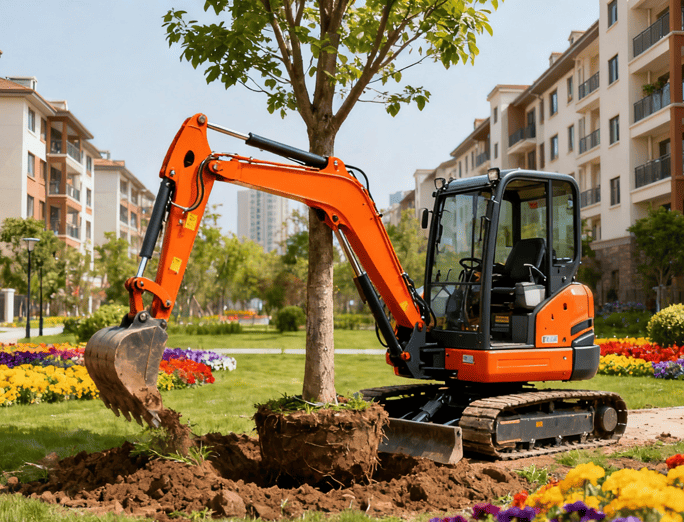
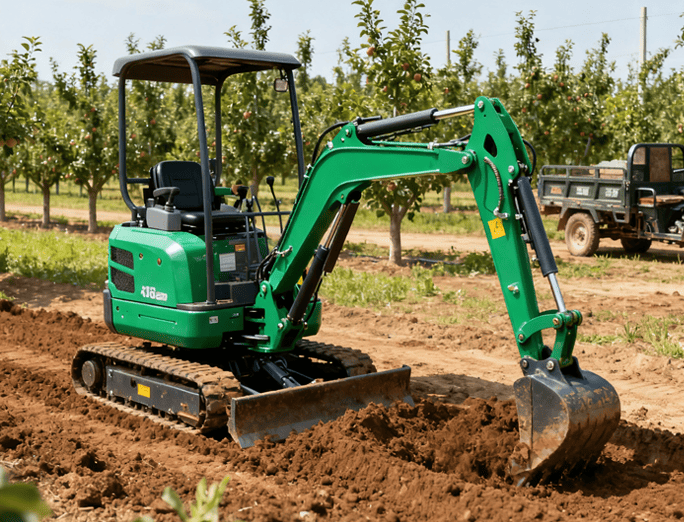
One of the most common residential applications for mini excavators is grading and leveling yards. These machines can precisely shape the terrain to create proper drainage away from foundations, establish desired slopes for landscaping, and prepare sites for patios, walkways, and other hardscaping features. Their ability to work in tight spaces makes them ideal for grading around trees, gardens, and existing structures.
Slope Creation and Terracing
Mini excavators are perfect for creating multi-level landscapes and terraced yards. They can excavate and move soil to form natural-looking slopes and terraces, adding visual interest to otherwise flat properties. The hydraulic thumb attachment allows for the precise placement of retaining wall blocks and boulders to create stable, attractive terraced gardens.
Drainage System Installation
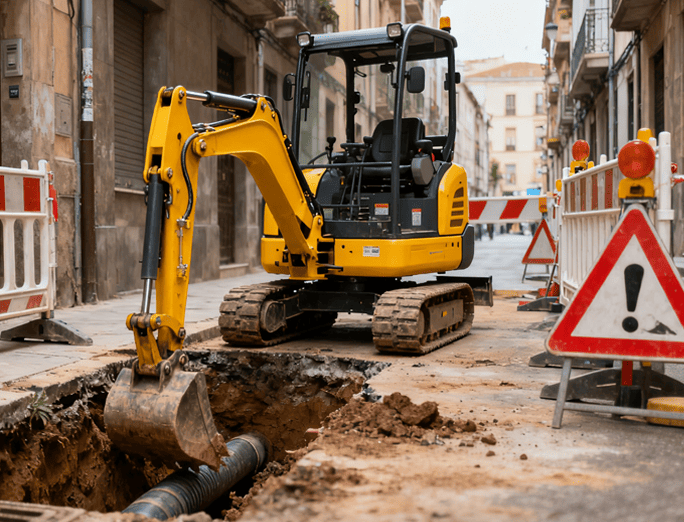
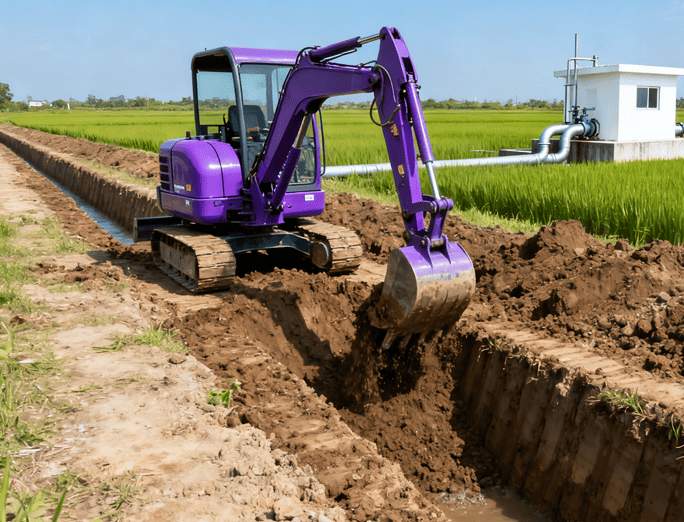
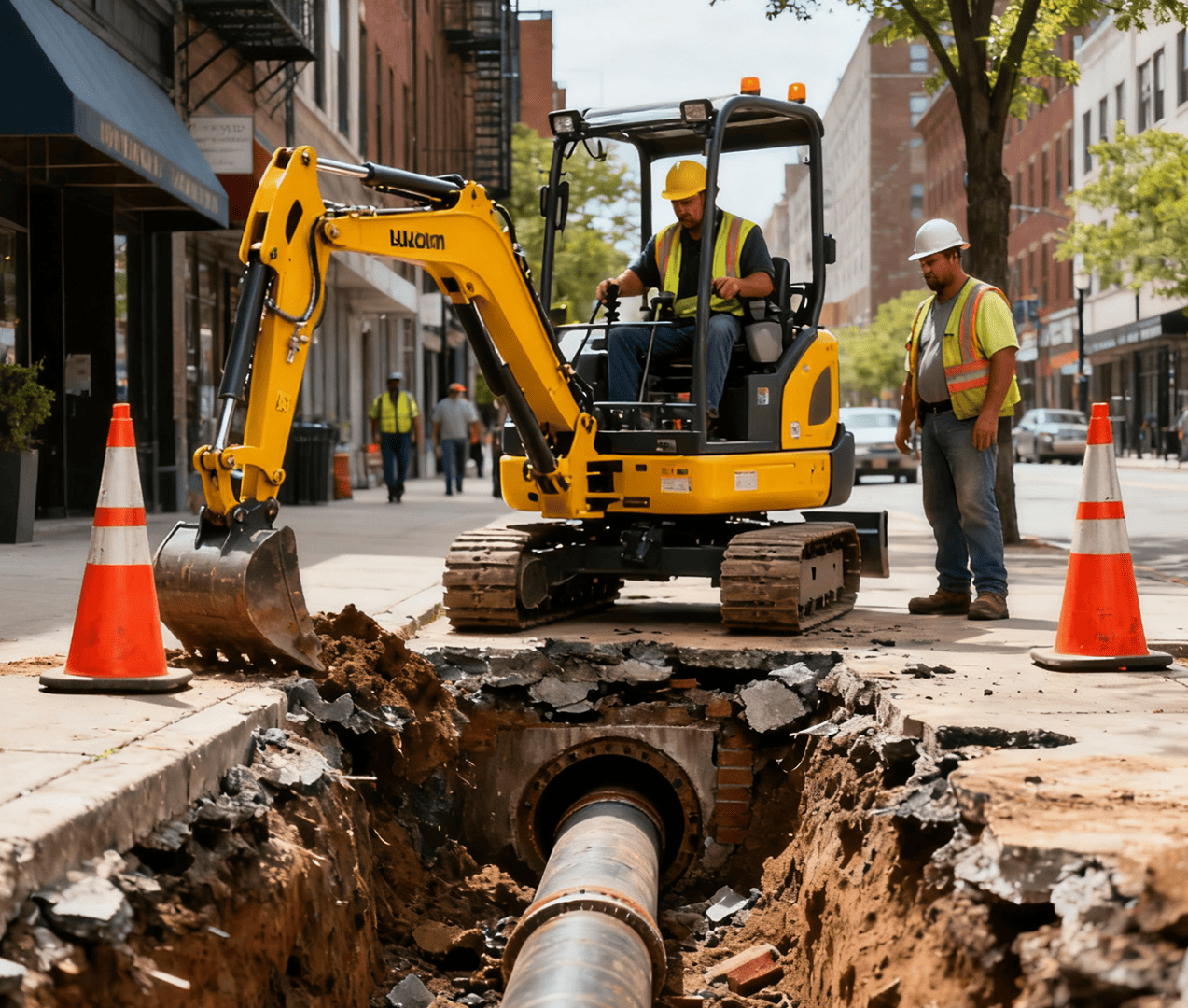
Proper drainage is essential for protecting residential foundations and preventing water damage. Mini excavators can dig French drains, swales, and dry wells with precision, ensuring proper slope and depth for effective water management. Their ability to work in confined spaces is particularly valuable when installing drainage systems around existing homes.
Advantages in Residential Applications
Access to Confined Spaces
The compact size of mini excavators allows them to access backyards through standard 3-foot gates, work in narrow side yards, and operate in spaces where larger equipment would be impossible to use. This capability is crucial for renovation projects and additions where space is limited.
Minimal Site Disturbance
Mini excavators cause significantly less disruption to existing landscaping and hardscaping than larger equipment. Their low ground pressure (typically 3-5 psi) means they can work on finished surfaces without damaging lawns, driveways, or patios. This preservation of existing features reduces restoration costs and maintains the property's aesthetic appeal.
Precision and Control
The hydraulic controls of modern mini excavators provide surgical precision that is essential for foundation work. Operators can make micro-adjustments to achieve exact grades, depths, and alignments, ensuring that foundations meet engineering specifications and building codes.
Versatility with Attachments
The ability to quickly change attachments makes mini excavators incredibly versatile for residential projects. Operators can switch between buckets for excavation, augers for footing holes, hydraulic thumbs for material handling, and rakes for fine grading—all with a single machine.
Cost Efficiency
For residential contractors, mini excavators offer excellent value. They consume less fuel than larger equipment (typically 1-2 gallons per hour), have lower transportation costs, and can be operated by a single person. Their efficiency in completing projects quickly translates to reduced labor costs and faster project completion.
Specialized Features for Residential Work
Zero-Tail-Swing Design
Most modern mini excavators feature zero-tail-swing or reduced-tail-swing designs, allowing them to rotate 360 degrees without the counterweight extending beyond the tracks. This feature is essential for working in tight spaces near buildings, fences, and property lines.
Hydraulic Thumbs
The hydraulic thumb attachment transforms the mini excavator into a material handling machine. It can grip and position rocks, boulders, retaining wall blocks, and other materials with precision, reducing the need for manual labor and improving safety on the job site.
Grade Control Systems
Many modern mini excavators are equipped with grade control technology that helps operators maintain consistent depth and slope throughout the excavation. This technology reduces the need for constant measurement and ensures that foundations and grading meet exact specifications.
Quick Coupler Systems
Quick couplers allow operators to change attachments in minutes, increasing productivity and reducing downtime. This is particularly valuable on residential projects where different tasks require different tools throughout the day.
Safety Considerations
Utility Location
Before beginning any excavation, it's essential to locate and mark existing underground utilities. Even with their precision, mini excavators can cause damage if operators are unaware of what lies beneath the surface.
Trench Safety
For foundation excavations deeper than 4 feet, proper shoring or trench boxes may be required depending on soil conditions. Mini excavators can be used to install protective systems, but operators must follow all safety regulations regarding trench work.
Slope Stability
When working on slopes or creating terraces, operators must ensure that the soil is stable and properly compacted to prevent collapse. The mini excavator's low ground pressure helps maintain slope stability during excavation.
Operator Training
Proper training is essential for safe and efficient operation. Operators should be certified and familiar with the specific machine they're using, as well as the safety protocols for residential construction work.
Environmental Benefits
Reduced Soil Compaction
The low ground pressure of mini excavators means they cause significantly less soil compaction than larger equipment or even repeated foot traffic. This helps preserve soil structure and promotes healthy root growth in surrounding vegetation.
Minimal Surface Disruption
Because mini excavators can work in tight spaces and create precise excavations, they minimize the amount of surface area that needs to be disturbed. This reduces erosion, preserves existing landscaping, and speeds up site restoration after the project is complete.
Efficient Material Management
The precision of mini excavators allows for targeted excavation, meaning less material needs to be removed from the site. This reduces transportation requirements and the associated environmental impact.
Future Trends
Electric and Hybrid Models
The residential construction industry is increasingly adopting electric and hybrid mini excavators. These models offer zero emissions, reduced noise levels, and lower operating costs, making them ideal for work in residential neighborhoods where noise restrictions may apply.
Advanced Technology Integration
GPS guidance systems, automated grade control, and telematics are becoming standard features on many mini excavators. These technologies improve accuracy, reduce operator fatigue, and provide real-time data on machine performance and project progress.
Enhanced Attachments
Manufacturers continue to develop new attachments specifically designed for residential work, including specialized buckets for different soil conditions, improved quick coupler systems, and attachments that can handle multiple functions.
Conclusion
Mini excavators have transformed residential construction and site preparation by providing the perfect combination of power, precision, and versatility. Their ability to work in confined spaces while delivering the performance needed for foundation excavation and grading makes them essential for both new home construction and renovation projects. With their low environmental impact, cost efficiency, and ever-improving technology, mini excavators will continue to be the preferred choice for residential contractors looking to deliver high-quality work with minimal disruption to the surrounding area. As urban areas become more densely populated and the demand for residential construction continues to grow, the role of the mini excavator in building and maintaining our homes will only become more important.